
Joshua Lezmi· Education Strategist · Speaker · Advisor

The bigger the ambition, the more deliberate the design.

I co-launched Alpha School Miami and, as Head of School, grew the campus from six to more than 60 students in one year, building the systems, developing the educators, and shaping the culture that made that growth possible.

Today, at the 900 Hours Project, I design K–8 curriculum that brings the same instructional rigor to durable skills—leadership, critical thinking, persuasion, and beyond—that we expect in reading and mathematics. I’m also developing AI-powered academic diagnostics through Hack the Gap, exploring how technology can help educators understand not just where students struggle, but why.

Through speaking, workshops, and strategic advising, I help educators, families, and organizations turn ambitious ideas about learning into practical, measurable outcomes.

Joshua Lezmi smiling, arms crossed
Fort Lauderdale, FLIn person or virtual

Affiliations, Engagements & Media

  • Gates Foundation
  • University of Miami
  • CBS News Miami
  • TODAY (NBC)
  • Alpha School
  • 900 Hours Project
  • Invest: Miami
  • 305 Hive

Alpha School Miami

6 → 60+

students in one year as Head of School, with 85%+ reaching at least 2× expected growth on NWEA MAP.

900 Hours Project

10 skills

durable skills like leadership and teamwork, made teachable and measurable across K–8.

Hack the Gap · Beta

Academic root cause analysis & remediation

AI-powered academic diagnostics that investigate underlying learning gaps and guide targeted remediation.

Watch me in the room · CBS News Miami

When a student got stuck, what happened next?

CBS News Miami segment on Alpha School Miami▶Watch on CBS · 3:23

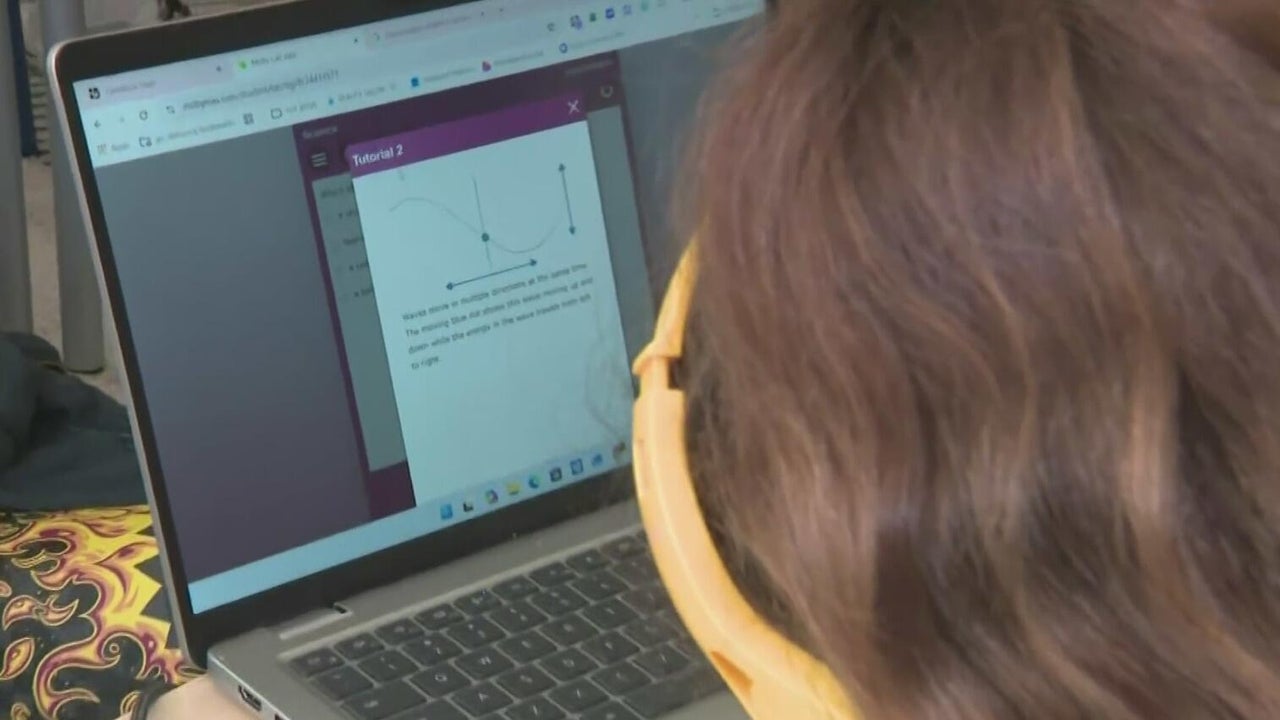
While I led Alpha Miami, CBS News Miami visited to see how we used AI to tailor lessons to every student. The point was never to replace teachers. It was to give students more time to build real-world skills.

Speaking record

Selected Speaking Engagements

Gates Foundation representatives
Education innovation roundtable
University of Miami
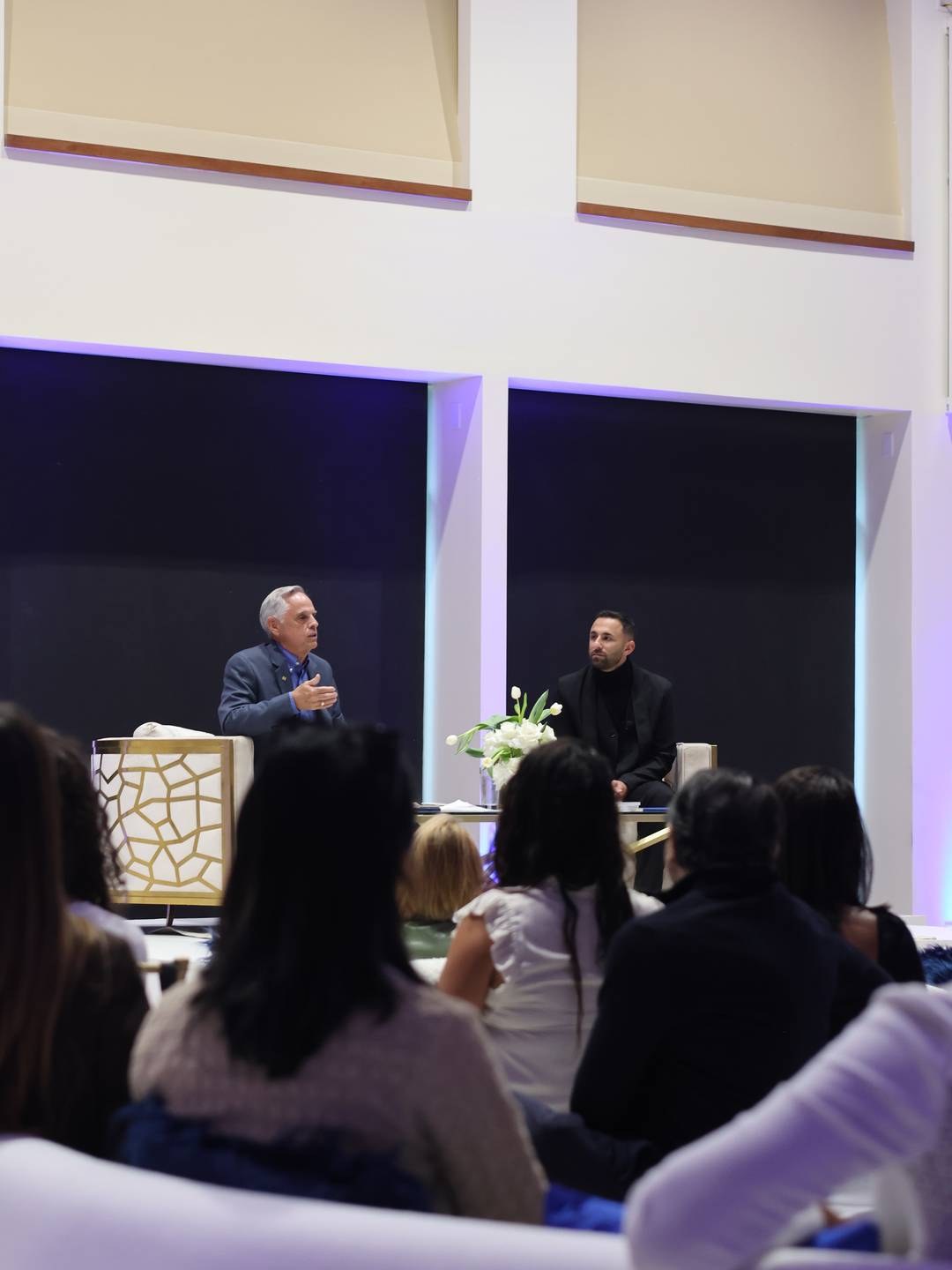
Fireside conversation with John G. Miller
High Standards, High Support
Parent education seminar
AI in Education
Educator professional development
Teaching Durable Skills
Curriculum design workshop

Talks & workshops I offer

Joshua Lezmi speaking on stage with a microphone

Three sessions you can book, each built so your people leave with something to use Monday.

45 to 90 minutes, tailored to your audience. Keynote, hands-on workshop, or a conversation on stage. In person or virtual. Not sure which fits? Tell me about your group and I’ll suggest one.

01

AI as an Educator’s Working Partner

How to use AI to cut administrative work and surface patterns in learning data, while educators keep the judgment. We take an AI-generated analysis and turn it into targeted support, with people weighing the evidence and directing the instructional response.

Best for
Teachers, instructional coaches, school leaders
Format
Keynote or hands-on workshop

Your audience leaves with

  • Where AI saves real time, and where it shouldn’t decide
  • A routine for turning data patterns into student support
  • How to check machine analysis against what you see in the room
02

From Portrait of a Graduate to Daily Instruction

Most schools have a list of competencies on the wall. Fewer can teach them on a Tuesday. We break life skills into foundational subskills, scaffold the practice, and define growth you can actually observe.

Best for
Curriculum teams, school leaders, PD days
Format
Hands-on workshop

Your audience leaves with

  • Unpacking a durable skill into teachable subskills
  • Observable benchmarks for growth and transfer
  • Connecting academic lessons to evidence of individual progress

03

What Makes Learning Worth the Effort?

Motivation isn’t a trait students arrive with. It’s shaped by how we design tasks and how we coach. We look at the barriers to engagement, then revise a real task or coaching response together.

Best for
Teachers, coaches, parent audiences
Format
Keynote, workshop, or fireside chat

Your audience leaves with

  • Common barriers to engagement, and how to spot them
  • Design moves that build agency and make progress visible
  • Coaching responses that support persistence through failure

Advisory & Consulting

From ambitious ideas to operational reality.

I help schools, education organizations, and EdTech ventures design learning systems that are ambitious in concept, practical in execution, and measurable in impact.

Curriculum & Learning Design

01

Competency frameworks, developmental progressions, experiential learning, and assessment architecture.

AI Strategy & Integration

02

Educational AI workflows, instructional decision-making, personalization, and quality assurance.

School & Program Innovation

03

Learning model implementation, student motivation systems, educator development, and program design.

Assessment & Diagnostics

04

Academic gap analysis, performance-based assessment, and targeted instructional interventions.

Available for strategic advisory, project-based consulting, design partnerships, and implementation support.

Let’s discuss what you’re building →

Selected work

Different challenges. A consistent design philosophy.

From launching an innovative school to designing measurable durable-skills experiences and developing AI-powered academic diagnostics, my work focuses on making ambitious ideas about learning actionable.

Case study 01 · Alpha School Miami

Organizational leadership & implementation

Turning an educational model into a thriving school

Alpha School Miami · Founding Educational Leader & Head of School

Co-launching and scaling an innovative school required more than implementing a new educational model. It required building a culture, developing educators, and designing systems that translated ambitious academic expectations into meaningful student experiences.

“Educational innovation is not primarily a technology challenge. It is a human and organizational design challenge.”
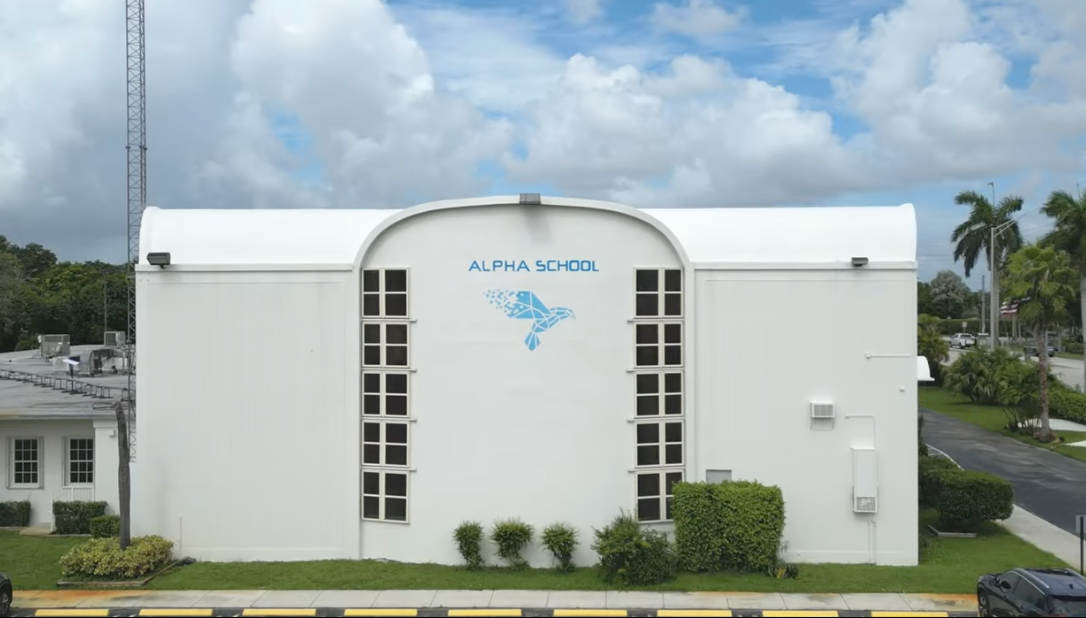
Alpha School Miami campus building
First-year enrollment growth
10×

First-year enrollment growth

6 → 60+ students

Expected MAP academic growth
2.8×

Expected MAP academic growth

Campus-wide

Love of School
95%

Love of School

Student measure

Explore case study ↓

The challenge

An innovative educational model is only as effective as its implementation. Launching a new school required translating an unconventional approach to learning into a cohesive daily experience that delivered academic results, earned family trust and cultivated genuine student engagement.

The impact

  • Grew enrollment from six to more than 60 students within the first year.
  • Led a campus achieving 2.8 times expected academic growth on MAP assessments.
  • Achieved a 95% Love of School measure.
  • Developed educators' capabilities in student coaching, motivation, academic intervention and experiential learning.
  • Represented the school's educational approach through media appearances, community events and conversations with education leaders.

My approach

As one of the school's two founding educational leaders and later Head of School, I helped establish and scale the campus while leading its educational implementation. My work focused on five interconnected priorities:

Student Motivation

Connecting ambitious academic expectations with meaningful goals, personalized coaching and student ownership. Developing individualized approaches to motivation based on students' interests, barriers and developmental needs.

Educator Development

Building and developing a team capable of facilitating learning, interpreting student performance, delivering effective coaching and designing individualized interventions.

Academic Strategy

Using academic performance data to identify learning gaps, investigate underlying challenges and develop targeted interventions that supported accelerated academic growth.

Operational Alignment

Translating educational philosophy into consistent expectations, routines and practices while creating systems that supported accountability, collaboration and continuous improvement.

Culture & Community

Building a school culture that balanced high expectations with high support, while cultivating trust among students, educators and families.

The broader insight

Educational innovation is not primarily a technology challenge. It is a human and organizational design challenge.

Technology can create new possibilities, but culture, motivation, educator capability and implementation determine whether those possibilities become meaningful outcomes.

Areas of expertise · School Leadership · Organizational Design · Student Motivation · Educator Development · Academic Strategy · Implementation

Case study 02 · 900 Hours Project

Curriculum architecture & assessment design

Making the intangible teachable

900 Hours Project · Curriculum Design & Implementation Lead

Leadership, adaptability and critical thinking are frequently identified as essential educational outcomes. But how do we move beyond aspirational language to design experiences that actually develop these competencies—and determine whether students have acquired them? My approach: break each broad competency into specific, observable subskills, then sequence those subskills so they build logically within a grade level and across grades K–8.

“Broad competencies become teachable when they're broken into subskills that build on each other, year over year.”

Across grades

Developing increasingly sophisticated competencies

Illustrative progression: Presence & Persuasion

K–2

3–5

6–8

Physical presence

Be heard

Hold attention

Adapt delivery

Structuring a case

Give a reason

Support a claim

Address objections

Reading the audience

Notice reactions

Check understanding

Tailor the message

Conceptual illustration created for this site. Not drawn from the 900 Hours Project's proprietary curriculum.
Explore case study ↓

The challenge

Schools increasingly identify leadership, adaptability, critical thinking and perseverance as essential educational outcomes. Yet these competencies often remain aspirational rather than instructional.

What does effective leadership look like in a second-grade classroom? How should that expectation evolve by eighth grade? And how can educators distinguish meaningful skill development from simple participation in an activity?

Answering these questions requires an approach that connects curriculum architecture, developmental psychology, experiential learning and assessment.

The output

An integrated approach to K–8 curriculum architecture connecting competency development, experiential learning, academic reinforcement and performance-based assessment.

The work draws on learning science, backward design and competency-based education to establish alignment between educational intention and instructional execution.

My approach

My work centers on translating abstract durable skills into developmentally appropriate, observable and teachable competencies across K–8. This requires connecting several traditionally separate aspects of educational design.

Competency Breakdown

Breaking broad competencies into identifiable subskills and observable behaviors, so each one can be taught and assessed on its own.

Developmental Progressions

Scaffolding each subskill within a grade level and across grades, so expectations evolve as students develop greater cognitive sophistication, independence, and agency.

Experiential Learning Design

Architecting engaging, purposeful challenges that require students to exercise specific competencies rather than simply learn about them.

Assessment Architecture

Aligning learning objectives with observable evidence of performance, allowing educators to distinguish participation from demonstrated skill development.

Academic Integration

Identifying authentic opportunities to reinforce literacy, mathematical reasoning and academic knowledge within engaging, competency-driven learning experiences.

Implementation Design

Developing structures and instructional guidance that allow educators to facilitate ambitious learning experiences consistently across different environments.

The broader insight

If a competency cannot be translated into observable behavior, it is difficult to teach intentionally or assess meaningfully.

The goal is not simply to create activities that involve collaboration, leadership or problem solving. It is to design experiences through which students become demonstrably better at those skills.

A Portrait of a Graduate should not be the endpoint of a strategic planning exercise. It should be the starting point of curriculum design.

Areas of expertise · Curriculum Architecture · Durable Skills · Competency-Based Learning · Developmental Progressions · Experiential Learning · Assessment Design

Case study 03 · Hack the Gap

AI innovation & educational product development

From identifying errors to understanding them

Hack the Gap · Educational Technology Product Development

Identifying what a student got wrong is not the same as understanding why they got it wrong. Hack the Gap explores how AI can help bridge the distance between academic assessment, diagnostic insight and targeted instruction.

“AI's greatest educational potential isn't generating more content. It's helping educators determine what a learner needs next—and why.”

Illustrative diagnostic example

The initial error

Write ¾ as a decimal.

Student’s answer: 0.34

Incorrect.

The revealing contrast

3 ÷ 4 = 0.75

The student calculates this correctly.

What does the fraction bar in ¾ mean?

The student is unsure.

The missing connection & the next step

They can do the division. They may not recognize that the fraction represents it.

These responses suggest a gap in connecting fraction notation to division.

A targeted next step

Show how three pizzas shared equally among four people give each person three-quarters of a pizza:

¾ = 3 ÷ 4 = 0.75

Then check whether the student can apply the connection to a new fraction, such as ⅖.

Conceptual example. A diagnostic hypothesis to check against additional student work.
Explore case study ↓

The challenge

Traditional assessments are effective at identifying what students answered incorrectly. They are often less effective at explaining why.

A student struggling with a particular mathematical operation may not need more practice with that operation. The difficulty may originate in an earlier conceptual misunderstanding, an overlooked prerequisite or a persistent misconception.

Without understanding that distinction, even personalized practice can target the wrong learning need. Meanwhile, educators and families are frequently presented with academic performance data without sufficient guidance on what to do next.

The vision

A more connected relationship between assessment and instruction, in which identifying a learning gap is the beginning of an intervention rather than the endpoint of an evaluation.

The initiative is currently in development, with an emphasis on diagnostic accuracy, instructional relevance and meaningful application across different learning environments.

My approach

Hack the Gap is an emerging educational technology initiative exploring how AI can transform academic performance data into actionable diagnostic insights and targeted learning interventions. My contributions span educational methodology, diagnostic design, product experience and quality assurance.

Diagnostic Depth

Moving beyond surface-level performance to investigate underlying academic misconceptions and prerequisite knowledge gaps.

Evidence-Based Interpretation

Using multiple indicators of student understanding to generate and evaluate diagnostic hypotheses rather than drawing conclusions from isolated errors.

Academic Progressions

Understanding how knowledge and skills build upon one another to identify where an intervention should begin.

Instructional Translation

Converting diagnostic insights into practical guidance, targeted learning experiences and personalized interventions that educators, tutors and families can act upon.

AI Quality Assurance

Developing systematic approaches to evaluating AI-generated educational outputs for accuracy, instructional relevance, consistency and alignment with learning objectives.

Human-AI Collaboration

Positioning AI as a diagnostic and strategic thought partner that strengthens human educational judgment rather than replacing it.

The broader insight

AI's greatest educational potential isn't generating more content. It's helping educators determine what a learner needs next—and why.

Personalized learning should mean more than adjusting the difficulty of the next question. It should mean understanding the learner well enough to determine the most meaningful next step.

Areas of expertise · AI Integration · Educational Product Development · Academic Diagnostics · Personalized Learning · Assessment Strategy · AI Quality Assurance

Ambitious ideas about learning only matter when they work for the people in the room.

The idea I keep coming back to

Invest:MiamiInterview · July 2026
“Standards do not change, but support increases when students struggle.”

High standards, high support. Many people don’t meet real failure until adulthood, and by then they lack the tools to manage it. So students should meet it early and often, and learn to respond productively instead of shutting down.

Read the chef story

In one workshop, professional chefs judged students’ dishes against industry standards. The feedback was direct, and students applied it immediately. That comfort carried into athletics, academics, and group work: the gap between hearing feedback and acting on it got shorter.

Read the full interview in Invest: Miami →
Joshua Lezmi and John G. Miller in conversation before an audience of parents
305 HiveRaising Accountable Kids, University of Miami. Photo via 305 Hive.

For parent audiences

Students adapt to productive failure quickly. Parents need more time.

That’s why I host parent education events. At the University of Miami, I sat down with best-selling author John G. Miller for Raising Accountable Kids, a fireside conversation on raising children who take ownership, handle challenges, and build the resilience real life asks for.

“Parents left with thoughtful takeaways and actionable ideas, making it a meaningful evening for the Miami community.”
— 305 Hive recap →

On their page, scroll to “Alpha School Miami: Raising Accountable Kids.”

What people say

“I came in expecting a lecture on psychology studies. Instead I left with an actual plan for getting my kid to care about homework, and a much better read on why he’d been digging in his heels.”
— ParentHigh Standards, High Support Seminar
“I had a student who’d rather do anything than talk in front of the class. Josh and I worked out a plan for him, step by step. A month later he was presenting to everyone. I honestly didn’t think that was happening this year.”
— EducatorProfessional Development Workshop
“I walked in thinking accountability meant more consequences. I walked out realizing I’d been doing way too much for my kids. Still warm, still supportive, but I’m letting them own more now.”
— AttendeeRaising Accountable Kids with John G. Miller
“I was half-expecting the ‘robots are coming for your job’ talk. Instead Josh showed me how to use AI to find exactly where my kids were stuck, so I could spend my time actually teaching instead of guessing.”
— K–2 EducatorAI in Education, Alpha School

About

I’m interested in the space between a good idea and what someone can actually do with it. What makes an explanation click? What helps someone persist when the work gets difficult? And how do we turn feedback into a next step rather than just a judgment?

Studying English alongside Brain and Cognitive Science at the University of Rochester sparked my interest in what happens between explaining an idea and someone actually understanding it. I first explored that question as an editor and writing coach, training writers and fellow tutors in rhetorical strategy and composition. It’s still the question I come back to when I design something new.